Table of Contents
- How QR Codes Create Interactive Product Experiences
- What Is an Interactive Product Experience?
- Why Customer Expectations Have Changed
- How QR Codes Connect Physical Products with Digital Experiences
- Making Products More Informative Without Complicated Packaging
- Creating Stronger Brand Connections
- Real-World Examples of Interactive Product Experiences
- Increasing Customer Engagement Beyond the Purchase
- Using Product Storytelling to Build Emotional Connections
- Delivering Personalized Product Experiences
- Encouraging Customer Feedback
- Supporting Loyalty Programs and Repeat Purchases
- Collecting Valuable Customer Insights Through Analytics
- Dynamic QR Codes Keep Product Experiences Fresh
- Benefits of Interactive Product Experiences
- Best Practices for Creating Interactive Product Experiences
- Conclusion
How QR Codes Create Interactive Product Experiences
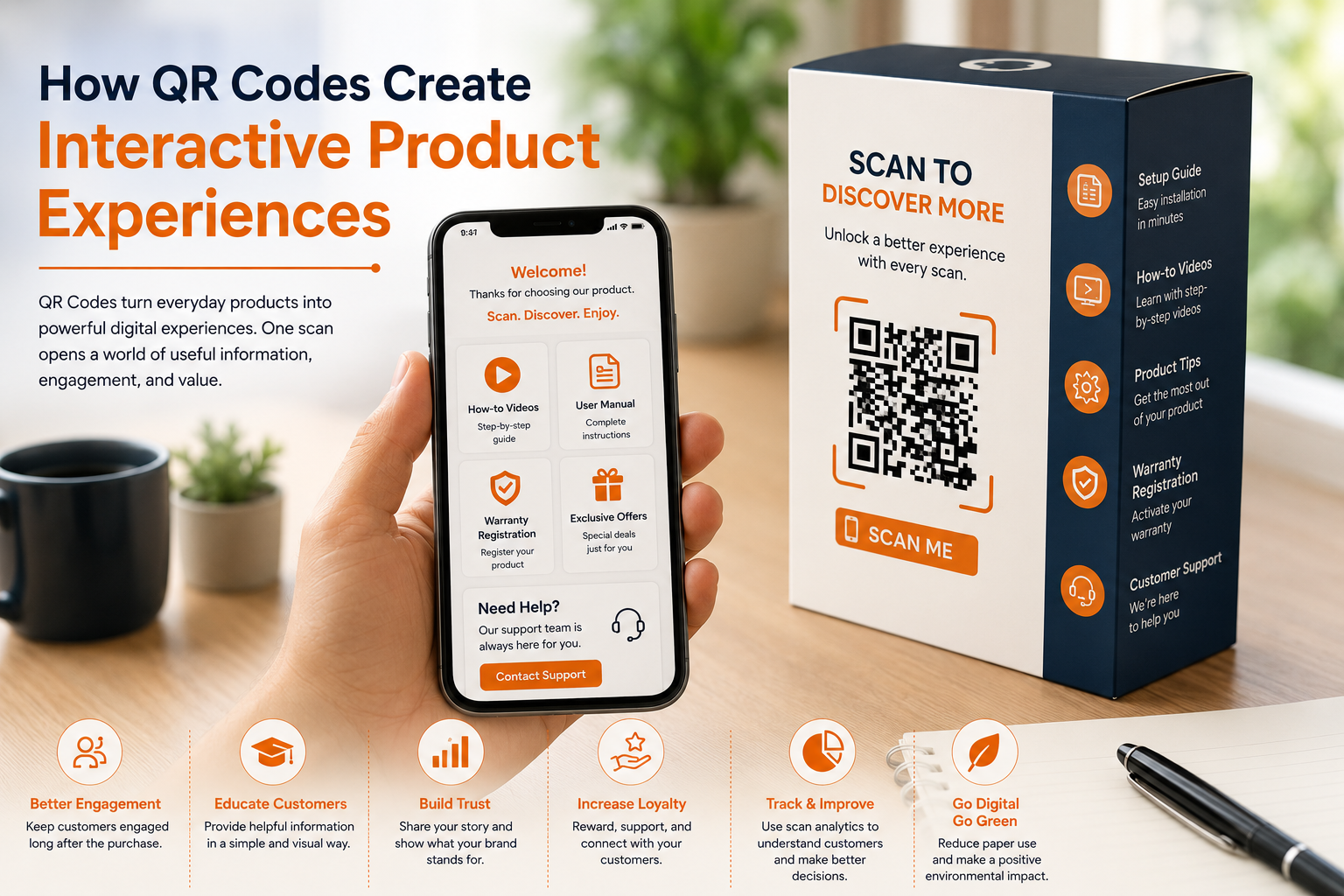
Today's customers expect much more than simply purchasing a product and walking away. They want to understand the story behind the brand, learn how to use the product correctly, discover helpful tips, watch demonstration videos, receive personalized recommendations, and feel connected with the companies they choose to support. Buying a product is no longer just a transaction—it has become part of an overall experience. As technology continues to influence consumer behavior, businesses are searching for new ways to make every product more informative, engaging, and memorable. One of the simplest yet most effective technologies helping brands achieve this is the QR code.
A few years ago, QR codes were primarily used to direct customers to websites or payment pages. Today, they have become an essential part of modern product packaging and customer engagement strategies. A single scan can instantly unlock a wide range of digital experiences, including product tutorials, warranty registration, user guides, recipe ideas, styling inspiration, customer reviews, loyalty rewards, exclusive offers, augmented reality experiences, and much more. Instead of limiting communication to the information printed on a package, businesses can continue interacting with customers long after the product leaves the store.
This shift is transforming the way customers interact with brands. Instead of searching online for instructions or customer support, users can simply scan a QR code printed on the packaging and instantly receive the exact information they need. The experience becomes faster, more convenient, and much more enjoyable. At the same time, businesses gain valuable opportunities to educate customers, strengthen relationships, improve satisfaction, and better understand customer preferences through meaningful digital interactions.
As competition continues to grow across every industry, creating memorable product experiences has become just as important as creating quality products. Businesses that successfully combine physical products with engaging digital experiences are often better positioned to build customer loyalty, encourage repeat purchases, and differentiate themselves from competitors. QR codes provide a simple and affordable way to achieve this without changing the product itself.
What Is an Interactive Product Experience?
An interactive product experience refers to the way customers continue engaging with a product after they purchase it. Rather than relying only on printed labels or instruction manuals, businesses provide digital content that helps customers learn more, solve problems, discover new features, and interact with the brand in meaningful ways.
Imagine purchasing a coffee machine. Instead of opening a thick instruction booklet, you simply scan the QR code on the box. Within seconds, your smartphone displays installation videos, maintenance guides, brewing tips, frequently asked questions, warranty registration, and customer support information. Everything you need is available instantly without searching multiple websites or contacting customer service.
The same approach works across almost every industry. Food companies can provide recipes and nutritional information. Cosmetic brands can share makeup tutorials and skincare routines. Electronics manufacturers can offer setup videos and troubleshooting guides. Furniture companies can display assembly instructions. Fashion brands can provide styling ideas and care instructions. Every interaction helps customers gain more value from their purchase while strengthening their connection with the brand.
Instead of ending the customer journey at the checkout counter, QR codes allow businesses to continue delivering value throughout the entire product lifecycle.
Why Customer Expectations Have Changed
Modern consumers are more informed than ever before. Before making a purchase, many customers compare products online, read reviews, watch demonstration videos, and explore social media recommendations. They expect quick access to accurate information and become frustrated when they cannot easily find the answers they need.
Traditional product packaging has limited space. Businesses often struggle to include detailed instructions, safety information, feature explanations, warranty details, and promotional content without overcrowding the design. Even when instruction manuals are included, customers rarely enjoy reading long printed documents. Most people prefer short videos, visual demonstrations, or step-by-step digital guides that are easier to understand.
This changing behavior has encouraged businesses to rethink how they communicate with customers. Rather than printing large amounts of information on packaging, many companies now use QR codes to provide instant access to rich digital content. Customers receive a cleaner product package while still having unlimited information available whenever they need it.
Convenience has become one of the biggest factors influencing customer satisfaction. If information is difficult to find, customers may become frustrated or contact customer support unnecessarily. QR codes solve this problem by placing useful information just one scan away.
How QR Codes Connect Physical Products with Digital Experiences
One of the greatest strengths of QR codes is their ability to bridge the gap between physical products and digital content. A product sitting on a retail shelf becomes much more than an item inside attractive packaging. It becomes a gateway to an interactive experience that continues long after the purchase has been completed.
When customers scan a QR code, they immediately enter a digital environment created specifically for that product. Instead of visiting a generic website, they can access information that is relevant to the exact item they purchased. This creates a personalized experience that feels far more valuable than simply reading printed instructions.
For example, a skincare product may lead customers to application videos, ingredient explanations, dermatologist advice, and personalized skincare routines. A kitchen appliance may provide installation guidance, maintenance reminders, cooking tutorials, and downloadable recipe books. A sports equipment manufacturer may share workout programs and training videos designed specifically for that product.
By combining physical products with digital experiences, businesses create additional value without increasing manufacturing costs. The product itself remains unchanged, but the customer experience becomes significantly richer and more engaging.
Making Products More Informative Without Complicated Packaging
Many businesses face the challenge of communicating large amounts of product information within limited packaging space. Important details such as usage instructions, certifications, safety precautions, multilingual content, warranty terms, troubleshooting guides, and customer support information can quickly overwhelm a product label.
QR codes solve this challenge by allowing businesses to keep packaging clean while providing unlimited digital information through a single scan. Instead of printing dozens of pages inside every product box, companies can create organized digital libraries that customers access whenever needed.
This approach also benefits international businesses. Rather than printing separate instruction manuals for multiple languages, businesses can direct customers to language-specific digital content after scanning the QR code. This reduces printing costs while improving accessibility for customers around the world.
As products evolve over time, businesses can update digital content without changing the packaging itself. Customers always receive the latest instructions, software updates, and support information, making the product experience more reliable and convenient.
Creating Stronger Brand Connections
Customers are more likely to remember brands that provide helpful experiences instead of simply selling products. Every interaction after a purchase represents an opportunity to strengthen trust, increase satisfaction, and encourage long-term loyalty.
QR codes allow businesses to communicate with customers in a more engaging and meaningful way. Instead of ending the relationship after the sale, companies can continue sharing useful information that helps customers get the most from their purchase. Educational videos, maintenance reminders, exclusive offers, loyalty rewards, and helpful tips all contribute to a stronger relationship between the customer and the brand.
Over time, these interactions create positive experiences that influence future purchasing decisions. Customers appreciate businesses that continue providing value rather than disappearing once the transaction has been completed. As a result, they become more likely to recommend the brand to others and return for future purchases.
Real-World Examples of Interactive Product Experiences
Interactive product experiences can be found across almost every industry because they solve practical challenges while improving customer satisfaction.
For example:
- A food brand can use QR codes to share recipes, serving ideas, nutritional information, and storage recommendations.
- A cosmetics company can provide beauty tutorials, ingredient information, and personalized skincare advice.
- An electronics manufacturer can offer setup videos, troubleshooting guides, software updates, and warranty registration.
- A furniture company can replace printed instruction manuals with step-by-step assembly videos.
- A fitness equipment manufacturer can share workout plans, exercise demonstrations, and maintenance tips.
- A toy manufacturer can unlock digital games, educational activities, or interactive storytelling experiences.
Although the products themselves differ, the objective remains the same—creating a better customer experience by combining physical products with useful digital content.
Increasing Customer Engagement Beyond the Purchase
For many businesses, the customer journey traditionally ended once a purchase was completed. After leaving the store or receiving an online order, customers were expected to use the product independently with little interaction from the brand. Today, that approach is changing rapidly. Businesses are realizing that the period after the purchase is one of the best opportunities to strengthen customer relationships, build trust, and encourage repeat business. QR codes make this possible by extending the customer journey far beyond the checkout counter.
When customers scan a QR code printed on product packaging, they immediately enter a digital experience created specifically for them. Instead of simply receiving a product, they begin interacting with the brand in new ways. They may watch instructional videos, explore advanced features, access exclusive offers, join loyalty programs, or receive useful tips that help them get more value from their purchase.
These ongoing interactions keep customers engaged for weeks or even months after buying the product. Rather than being remembered as just another purchase, the product becomes part of a continuing relationship between the customer and the brand. This sustained engagement often leads to greater customer satisfaction, stronger loyalty, and increased recommendations through word-of-mouth.
Using Product Storytelling to Build Emotional Connections
Every successful brand has a story. Customers are increasingly interested in knowing where products come from, how they are made, what values the company represents, and what makes one product different from another. Unfortunately, product packaging has very limited space, making it difficult to communicate these stories effectively.
QR codes solve this challenge by connecting customers to rich digital storytelling experiences. A simple scan can reveal the journey of a product from design to production, introduce the people behind the brand, explain sourcing practices, or showcase the craftsmanship involved in manufacturing.
For example, a coffee company can use QR codes to show where its coffee beans are grown, introduce local farmers, explain roasting techniques, and share brewing recommendations. A clothing brand can present information about sustainable fabrics, ethical manufacturing, and fashion inspiration. A handmade product can include videos showing the craftsmanship behind each item.
These stories help customers feel emotionally connected to the brand rather than simply purchasing another product. When customers understand the effort, quality, and purpose behind what they buy, they are often more likely to trust the company and remain loyal over time.
Delivering Personalized Product Experiences
No two customers are exactly alike. Different people have different interests, experience levels, preferences, and expectations. Providing the same information to every customer may not always create the best experience. Dynamic QR Codes allow businesses to personalize digital content in ways that make interactions more meaningful.
A customer purchasing a beginner-level fitness product may benefit from basic instructional videos, while experienced users may prefer advanced training programs. Someone buying skincare products may appreciate recommendations based on skin type, while food brands may suggest recipes based on dietary preferences.
Instead of overwhelming every customer with identical information, businesses can continuously improve digital experiences by updating content, introducing seasonal campaigns, promoting complementary products, or providing personalized recommendations through the same QR code.
This flexibility makes customers feel that the brand understands their needs, creating a more engaging and enjoyable experience.
Encouraging Customer Feedback
Understanding customer opinions is one of the most valuable ways businesses can improve their products and services. However, encouraging customers to leave reviews or complete feedback forms is often difficult because the process can feel time-consuming.
QR codes simplify customer feedback by removing unnecessary steps. Rather than asking customers to search for a review page online, businesses can place a QR code directly on the product packaging or receipt. After scanning, customers are taken directly to a feedback form where they can quickly share their experience.
Because the process is so convenient, more customers are likely to participate. Businesses receive valuable insights about product quality, customer satisfaction, packaging, usability, and service performance. These insights help companies identify opportunities for improvement while demonstrating to customers that their opinions matter.
Supporting Loyalty Programs and Repeat Purchases
Customer loyalty does not happen by accident. It develops when businesses consistently provide value beyond the initial purchase. QR codes offer an effective way to introduce loyalty programs without making the registration process complicated.
After purchasing a product, customers can scan the QR code to register for loyalty rewards, collect points, receive exclusive member discounts, or gain early access to new product launches. The process feels natural because it is directly connected to the product they already own.
As customers continue interacting with the brand through these programs, businesses gain opportunities to maintain regular communication and encourage repeat purchases. Instead of constantly searching for new customers, companies strengthen relationships with existing ones while increasing long-term customer value.
Collecting Valuable Customer Insights Through Analytics
One of the biggest advantages of Dynamic QR Codes is the ability to understand how customers interact with products after purchase. Every scan provides useful information that helps businesses improve marketing strategies and product experiences.
Analytics can reveal:
- Which products receive the highest number of scans.
- Which digital content customers access most frequently.
- Which locations generate the strongest customer engagement.
- What times customers are most active.
- Which promotional campaigns produce the best results.
Rather than making decisions based on assumptions, businesses gain access to real customer behavior. This information helps improve packaging, marketing campaigns, customer support, and future product development.
Dynamic QR Codes Keep Product Experiences Fresh
One of the hidden strengths of Dynamic QR Codes is that businesses never need to replace the printed QR code when information changes. Instead, they simply update the digital destination.
This flexibility allows companies to keep customer experiences fresh throughout the product's lifecycle. The same QR code can initially display installation instructions, later provide maintenance tips, introduce seasonal promotions, and eventually invite customers to participate in surveys or loyalty programs.
Because the printed packaging remains unchanged, businesses save significant printing costs while ensuring customers always receive current information. This makes Dynamic QR Codes particularly valuable for products with long lifecycles, frequent updates, or evolving marketing campaigns.
Benefits of Interactive Product Experiences
Businesses that use QR codes to create interactive product experiences often enjoy several long-term advantages:
- Better customer engagement after the purchase.
- Stronger brand loyalty and trust.
- Improved customer education through digital content.
- Reduced printing costs by replacing lengthy manuals.
- Faster access to product support and troubleshooting.
- Valuable customer insights through scan analytics.
- Easier product updates using Dynamic QR Codes.
- Increased opportunities for repeat purchases through loyalty programs.
These benefits help businesses create more meaningful relationships with customers while improving both marketing performance and overall customer satisfaction.
Best Practices for Creating Interactive Product Experiences
To create successful interactive product experiences, businesses should focus on providing genuine value rather than simply adding a QR code to the packaging.
Some useful recommendations include:
- Make the QR code easy to find and scan.
- Clearly explain what customers will receive after scanning.
- Ensure all digital content is mobile-friendly.
- Keep videos and guides simple and easy to understand.
- Update content regularly using Dynamic QR Codes.
- Monitor scan analytics to understand customer behavior.
- Continue adding new content that encourages customers to return.
When businesses consistently deliver helpful information through QR codes, customers begin viewing them as valuable resources instead of simple links.
Conclusion
In today's competitive marketplace, creating a great product is no longer enough. Customers expect every purchase to deliver value beyond the product itself. They want instant access to helpful information, easy-to-follow guidance, personalized recommendations, engaging brand stories, and responsive support whenever they need it. Businesses that can provide these experiences are far more likely to earn customer trust, strengthen brand loyalty, and encourage repeat purchases. QR codes have become one of the simplest and most effective ways to bridge the gap between physical products and digital experiences, transforming ordinary packaging into an interactive communication channel that continues to add value long after the sale.
Interactive product experiences are not only beneficial for customers but also for businesses. By connecting products to digital content, companies can educate users, reduce customer support inquiries, collect valuable feedback, promote complementary products, launch loyalty programs, and gain meaningful insights through scan analytics. Dynamic QR Codes take these benefits even further by allowing businesses to update content at any time without changing the printed QR code, ensuring that customers always receive accurate, relevant, and up-to-date information. This flexibility helps businesses reduce printing costs, improve marketing efficiency, and keep every product experience fresh throughout its lifecycle.
With QR Orange, businesses can easily create Dynamic QR Codes that turn every product into an engaging digital experience. From product manuals and how-to videos to warranty registration, customer feedback, promotional offers, and detailed analytics, QR Orange provides everything needed to build stronger customer relationships and deliver smarter product experiences. As customer expectations continue to evolve, brands that embrace interactive product experiences today will be better positioned to stand out in the market, build lasting customer loyalty, and create meaningful connections that extend well beyond the first purchase.