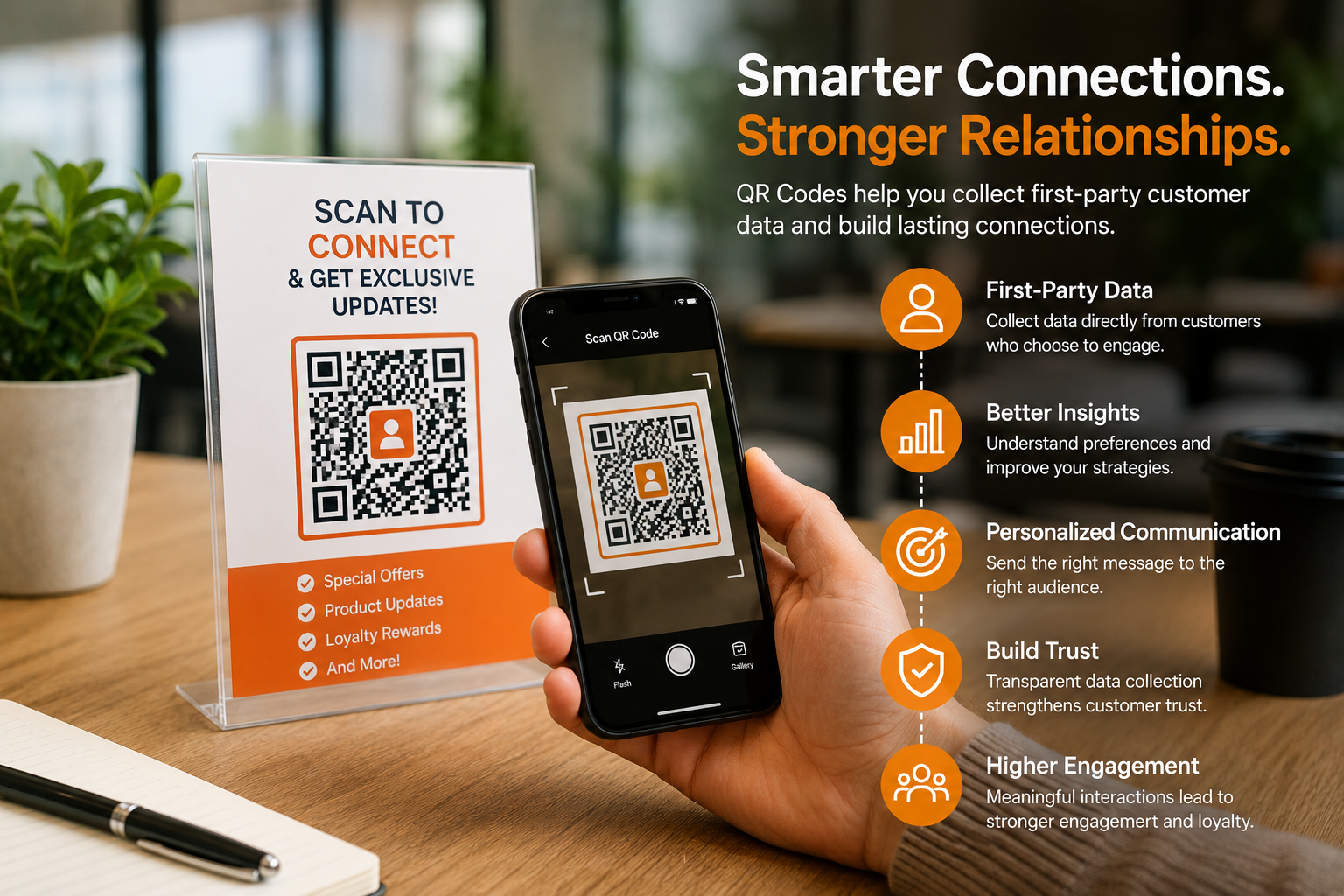
How QR Codes Help Businesses Collect First-Party Customer Data
Over the last few years, the way businesses collect customer information has changed dramatically. Consumers are becoming more aware of how their personal information is collected and used, while governments around the world have introduced stricter privacy regulations to protect user data. At the same time, major web browsers are reducing support for third-party cookies, making it increasingly difficult for businesses to rely on traditional digital advertising methods for understanding customer behavior. As these changes continue to reshape digital marketing, companies are searching for smarter, more transparent, and privacy-friendly ways to build relationships with their customers. One solution that is gaining attention across industries is the use of QR codes to collect first-party customer data.
Unlike third-party data, which often comes from external sources and can become less reliable over time, first-party data is collected directly from customers who willingly interact with a business. This information is more accurate, more relevant, and far more valuable because it reflects genuine customer interest. Every time a customer scans a QR code to access a product catalog, register for an event, download a brochure, join a loyalty program, complete a feedback form, or subscribe to updates, they are choosing to interact with the brand. That interaction creates an opportunity for businesses to understand their customers better while respecting their privacy and preferences.
QR codes have evolved far beyond simply linking to websites. Today they are powerful digital tools that connect offline experiences with online interactions. A QR code printed on product packaging, displayed in a retail store, included in a newspaper advertisement, or placed at an exhibition booth can instantly guide customers to personalized digital experiences. Instead of relying solely on expensive advertising campaigns or complex tracking technologies, businesses can use QR codes to encourage customers to voluntarily share information through engaging and useful content. This approach not only builds trust but also helps organizations create stronger long-term relationships with their audience.
As businesses continue moving toward privacy-focused marketing, first-party customer data is becoming one of their most valuable assets. Companies that learn how to collect it effectively today will be in a much stronger position to understand customer behavior, improve marketing campaigns, personalize communication, and make better business decisions in the future.
Understanding First-Party Customer Data
First-party customer data is the information that a business collects directly from its own customers through interactions with its products, services, websites, applications, or marketing campaigns. Unlike purchased databases or information gathered through external advertising platforms, first-party data comes directly from people who have chosen to engage with the business. This makes the information more reliable because it reflects real customer interests rather than assumptions or estimates.
For example, when a customer scans a QR code on a product package to register their purchase, fills out a feedback form after visiting a restaurant, signs up for a newsletter through a QR code displayed in a store, or downloads a digital brochure from an exhibition booth, they are voluntarily providing valuable information. Every interaction helps businesses understand customer preferences, interests, purchasing behavior, and communication choices without depending on third-party tracking methods.
As privacy regulations continue to evolve, customers increasingly appreciate businesses that collect information transparently and explain how it will be used. QR codes naturally support this approach because customers actively decide whether they want to scan the code and participate. This voluntary interaction creates trust while also providing businesses with meaningful insights that can improve future customer experiences.
Why First-Party Data Has Become More Important Than Ever
Digital marketing has changed significantly over the past few years. Businesses once depended heavily on third-party cookies to understand customer behavior across multiple websites. These technologies allowed advertisers to create detailed profiles based on browsing activity, helping them display highly targeted advertisements. However, increasing concerns about online privacy have changed how businesses approach customer data collection.
Today, consumers expect greater transparency about how their information is collected and used. Privacy laws have strengthened around the world, and major technology companies have introduced features that give users more control over their personal information. As a result, businesses must focus on building direct relationships with customers rather than relying on external tracking methods.
First-party customer data provides a practical solution to this challenge. Since the information comes directly from customer interactions, it is generally more accurate, more relevant, and easier to manage. Businesses no longer need to depend entirely on external advertising platforms to understand their audience. Instead, they can build their own customer database through meaningful interactions that deliver value to both the customer and the business.
QR codes play an important role in this transition because they create simple opportunities for customers to connect with brands whenever and wherever they choose. Whether someone is visiting a retail store, attending a conference, purchasing a product, or reading printed marketing material, a QR code provides an immediate pathway to digital engagement.
How QR Codes Make Data Collection Simple
One of the biggest reasons businesses are adopting QR codes is their simplicity. Almost every modern smartphone can scan a QR code using its built-in camera, eliminating the need for additional applications or complicated instructions. Customers simply point their camera at the code, tap the notification, and instantly access digital content.
This ease of use removes many of the barriers that often discourage customer participation. Instead of asking customers to manually type long website addresses, search online for registration forms, or download separate applications, businesses can guide them directly to the desired destination with a single scan.
Imagine a customer purchasing a new electronic device. Rather than placing a paper warranty card inside the box, the manufacturer includes a QR code that leads to an online registration page. While registering the product, the customer provides their email address and product information. In return, they receive warranty confirmation, user guides, software updates, and customer support resources. The customer benefits from a smoother experience, while the business gains valuable first-party customer data that can support future communication.
The same approach works across many industries. Restaurants can collect customer feedback after meals, retailers can invite shoppers to join loyalty programs, educational institutions can register event participants, and healthcare providers can share appointment information through QR codes. In every case, the interaction feels natural because customers receive immediate value for scanning.
Creating Better Customer Experiences Through QR Codes
Customers are much more willing to share information when they receive something useful in return. Simply asking someone to complete a lengthy registration form without offering any benefit often results in low participation. QR codes encourage engagement because they provide instant access to valuable content that customers actually want.
For example, a clothing brand might place QR codes on garment tags that lead customers to styling ideas, washing instructions, and exclusive member discounts. A furniture retailer may use QR codes to provide assembly videos and maintenance guides. A food manufacturer can share recipes, nutritional information, and cooking tips through QR codes printed on packaging. In each situation, customers gain immediate value while businesses learn more about how people interact with their products.
This value-first approach creates a better customer experience because it focuses on helping rather than simply collecting information. Customers appreciate businesses that make information easily accessible, and that positive experience often encourages further engagement in the future.
Collecting Meaningful Customer Insights
Every QR code interaction provides businesses with opportunities to understand their audience more effectively. Beyond basic contact information, businesses can learn which marketing campaigns generate the most interest, which products receive the highest engagement, and which locations produce the strongest customer response.
These insights help organizations make more informed decisions about future marketing activities. Instead of relying on assumptions, businesses can analyze real customer behavior to improve product offerings, advertising strategies, and communication efforts.
Some of the valuable insights businesses can gather include:
- Customer interests and preferences
- Popular products or services
- Campaign performance
- Geographic engagement trends
- Customer feedback and satisfaction
- Event participation
- Loyalty program registrations
- Newsletter subscriptions
Rather than collecting large amounts of unnecessary information, businesses can focus on gathering meaningful data that genuinely helps improve customer experiences and business performance.
Building Stronger Customer Relationships
Collecting customer data should never be viewed simply as gathering names and email addresses. The real goal is to build long-term relationships based on trust, relevance, and ongoing value. QR codes create opportunities for businesses to continue meaningful conversations with customers long after the initial interaction.
When someone voluntarily shares their information after scanning a QR code, they are expressing genuine interest in the business. This creates an opportunity to provide helpful updates, exclusive offers, educational content, product recommendations, or customer support based on their preferences.
Instead of sending generic marketing messages to everyone, businesses can communicate more thoughtfully with customers who have already shown interest. This personalized approach often leads to higher engagement, stronger customer loyalty, and improved long-term relationships because communication feels more relevant and less intrusive.
Using QR Codes to Strengthen Loyalty Programs
Customer loyalty has always been one of the most valuable assets for any business. While attracting new customers is important, encouraging existing customers to return again and again often creates greater long-term success. However, building loyalty requires businesses to understand their customers, communicate consistently, and reward them in meaningful ways. This is where QR codes have become incredibly useful.
Instead of asking customers to complete lengthy registration forms or download separate applications before joining a loyalty program, businesses can simplify the entire process with a QR code. A customer visiting a café, shopping at a retail store, dining at a restaurant, or purchasing a product simply scans a QR code placed on the receipt, packaging, table, or checkout counter. Within seconds they are directed to a simple registration page where they can join the loyalty program by providing only the necessary information.
This approach feels effortless because customers immediately understand the benefit of scanning. In return for sharing their information, they may receive reward points, discount coupons, birthday offers, early access to new products, or exclusive promotions. Since customers willingly provide their details, the business begins building a valuable database of first-party customer information while also increasing the likelihood of repeat purchases.
Over time, every interaction within the loyalty program helps businesses understand customer preferences. They can identify which products are purchased most frequently, how often customers return, what promotions encourage additional purchases, and which communication methods generate the highest engagement. These insights make future marketing campaigns much more effective because they are based on real customer behavior rather than assumptions.
QR Codes at Events and Exhibitions
Trade shows, exhibitions, conferences, and business networking events provide excellent opportunities for companies to meet potential customers. However, collecting visitor information has traditionally involved paper forms, business cards, or manually entering details into spreadsheets after the event. This process often leads to incomplete records, lost contacts, and missed opportunities.
QR codes make lead collection significantly easier. Instead of asking visitors to fill out lengthy forms, businesses can display a QR code at their exhibition booth. Interested visitors simply scan the code to access product brochures, company presentations, service catalogs, or appointment booking pages. If they wish to receive additional information, they can voluntarily provide their contact details through a simple digital form.
This creates a much smoother experience for both the visitor and the business. Visitors receive useful information immediately, while businesses collect accurate first-party customer data without relying on handwritten forms or stacks of business cards. Because the interaction happens digitally, follow-up communication can begin much sooner, increasing the chances of converting interested visitors into customers.
Product Packaging as a Data Collection Tool
Product packaging is often one of the most overlooked marketing opportunities. Once a customer purchases a product, the relationship with the brand should not end at the checkout counter. Instead, packaging can become an ongoing communication channel that encourages customers to continue interacting with the business.
By placing QR codes on product packaging, businesses can invite customers to register warranties, explore product tutorials, watch demonstration videos, access user manuals, discover recipes, participate in contests, or provide product feedback. Every one of these interactions creates an opportunity to collect valuable first-party customer data while delivering useful information that improves the customer experience.
Imagine purchasing a kitchen appliance. Instead of receiving only a printed instruction manual, you scan the QR code on the packaging and immediately access installation videos, maintenance tips, recipe suggestions, warranty registration, and customer support. The business benefits from better customer engagement, while the customer enjoys a simpler and more convenient experience.
Understanding Customer Behavior Through QR Code Analytics
Collecting customer data becomes far more valuable when businesses understand how to analyze it effectively. Modern QR codes, particularly dynamic QR codes, provide detailed analytics that help businesses evaluate the success of their marketing activities.
Each scan provides useful information about customer interactions. Businesses can identify which campaigns generate the highest engagement, which products attract the most interest, what times customers are most active, and how different marketing channels perform. Instead of relying solely on estimates, companies gain access to measurable insights that support better decision-making.
For example, if the same QR code is placed on product packaging, magazine advertisements, exhibition banners, and retail displays, businesses can compare performance across each location. They can determine which marketing investments produce the strongest results and adjust future campaigns accordingly. This continuous learning process helps improve marketing efficiency while reducing unnecessary spending.
Personalizing Customer Communication
Modern customers expect communication that feels relevant to their interests. Generic promotional emails sent to thousands of people often receive little attention because they fail to address individual needs. First-party customer data collected through QR codes allows businesses to create more personalized experiences.
When customers voluntarily provide information about their preferences, businesses gain a better understanding of what matters to them. Someone who scans a QR code to download a product guide may be interested in educational content, while another customer who joins a loyalty program may appreciate exclusive discounts and reward offers. Rather than treating every customer the same, businesses can tailor communication based on genuine interests and previous interactions.
Personalized communication creates stronger customer relationships because it demonstrates that the business understands its audience. Customers are more likely to engage with messages that provide relevant information instead of receiving frequent promotional content that offers little value.
Building Trust Through Transparency
Trust is one of the most important factors influencing whether customers choose to share their personal information. Businesses that clearly explain why information is being collected and how it will be used are far more likely to earn customer confidence.
QR codes naturally encourage transparent communication because they give customers complete control over the interaction. People choose whether to scan the code, what information they wish to provide, and whether they want to continue engaging with the business. This voluntary approach feels more respectful than traditional advertising methods that rely on hidden tracking technologies.
Businesses should always explain the purpose of their forms, collect only information that is genuinely necessary, and protect customer data responsibly. When customers feel their privacy is respected, they are more willing to build long-term relationships with the brand.
Best Practices for Collecting First-Party Customer Data with QR Codes
Businesses achieve better results when QR code campaigns focus on delivering genuine value instead of simply collecting information.
Some practical recommendations include:
- Offer a clear benefit before asking customers to share their information.
- Keep registration forms short and simple.
- Explain how customer information will be used.
- Use Dynamic QR Codes so content can be updated without changing the printed code.
- Regularly review QR code analytics to improve future campaigns.
- Respect customer privacy and follow applicable data protection regulations.
These simple practices help businesses collect higher-quality customer data while creating positive experiences that encourage ongoing engagement.
Why Dynamic QR Codes Are Ideal for Data Collection
Dynamic QR Codes offer significant advantages over static QR codes when businesses want to build long-term customer relationships. Since the destination can be updated without changing the printed QR code, businesses can continue improving campaigns even after marketing materials have been distributed.
A single QR code printed on product packaging can initially direct customers to a warranty registration page. Later, the same QR code can provide seasonal promotions, customer surveys, educational resources, or loyalty program invitations without requiring new packaging.
This flexibility allows businesses to maximize the value of every printed QR code while continuously collecting meaningful first-party customer data.
Conclusion
https://qrorange.com/v_card As businesses continue to adapt to a more privacy-focused digital landscape, first-party customer data has become one of the most valuable resources for building meaningful and lasting customer relationships. Instead of depending on third-party tracking methods that are becoming less reliable, organizations are looking for ways to connect directly with their customers through transparent and value-driven interactions. QR codes provide a simple yet powerful solution by bridging the gap between offline and online experiences while making it easy for customers to engage on their own terms.
Whether used on product packaging, marketing materials, retail displays, event booths, or digital campaigns, QR codes encourage customers to voluntarily share information in exchange for useful content, exclusive offers, personalized experiences, or valuable resources. This not only helps businesses build a high-quality first-party customer database but also creates stronger trust, better communication, and more relevant customer experiences. Every scan becomes an opportunity to learn more about customer preferences, improve marketing strategies, and deliver services that truly meet customer needs.
With Dynamic QR Codes and built-in analytics, businesses can continuously optimize their campaigns, monitor customer engagement, and update digital content without changing the printed QR code. This flexibility makes QR codes an effective long-term marketing and customer engagement tool for businesses of every size.
If you're looking for a smarter way to collect first-party customer data while improving customer experiences, QR Orange offers an easy and reliable solution. Create Dynamic QR Codes, connect customers to meaningful digital experiences, track engagement with detailed analytics, and build stronger customer relationships—all through a single, simple scan. In a world where trust, personalization, and privacy matter more than ever, QR codes are helping businesses create stronger connections and prepare for the future of digital marketing.