Table of Contents
- What Is a QR Library Code?
- Why Libraries Are Adopting QR Code Technology
- Making Library Information Easily Accessible
- Simplifying Library Membership Information
- Providing Instant Access to Library Rules and Guidelines
- Connecting Users to the Online Catalog
- Supporting Digital Libraries and E-Resources
- Helping Students and Researchers Save Time
- Improving Communication Between Libraries and Visitors
- Supporting Library Events and Programs
- Enhancing Navigation Inside Large Libraries
- Supporting Contactless Information Access
- Reducing Paper Usage and Printing Costs
- Why Dynamic QR Codes Are Better for Libraries
- Benefits of QR Library Codes
- Who Can Use QR Library Codes?
- The Future of Libraries and QR Technology
- Why QR Orange QR Library Is a Smart Choice
- Frequently Asked Questions
- What is a QR Library Code?
- Can QR Library Codes provide catalog access?
- Are QR Library Codes useful for students?
- Can libraries update information later?
- Do users need a special app?
- Are QR Library Codes suitable for public libraries?
- Conclusion
Libraries have always played an important role in education, research, and lifelong learning. They provide access to books, journals, digital resources, archives, and valuable information that help people learn and grow. However, as technology continues to change how people access information, libraries are also evolving. Today's students, researchers, and readers expect faster access, digital convenience, and seamless experiences that fit into their smartphone-driven lifestyles.
This is where QR Library Codes are transforming the library experience.
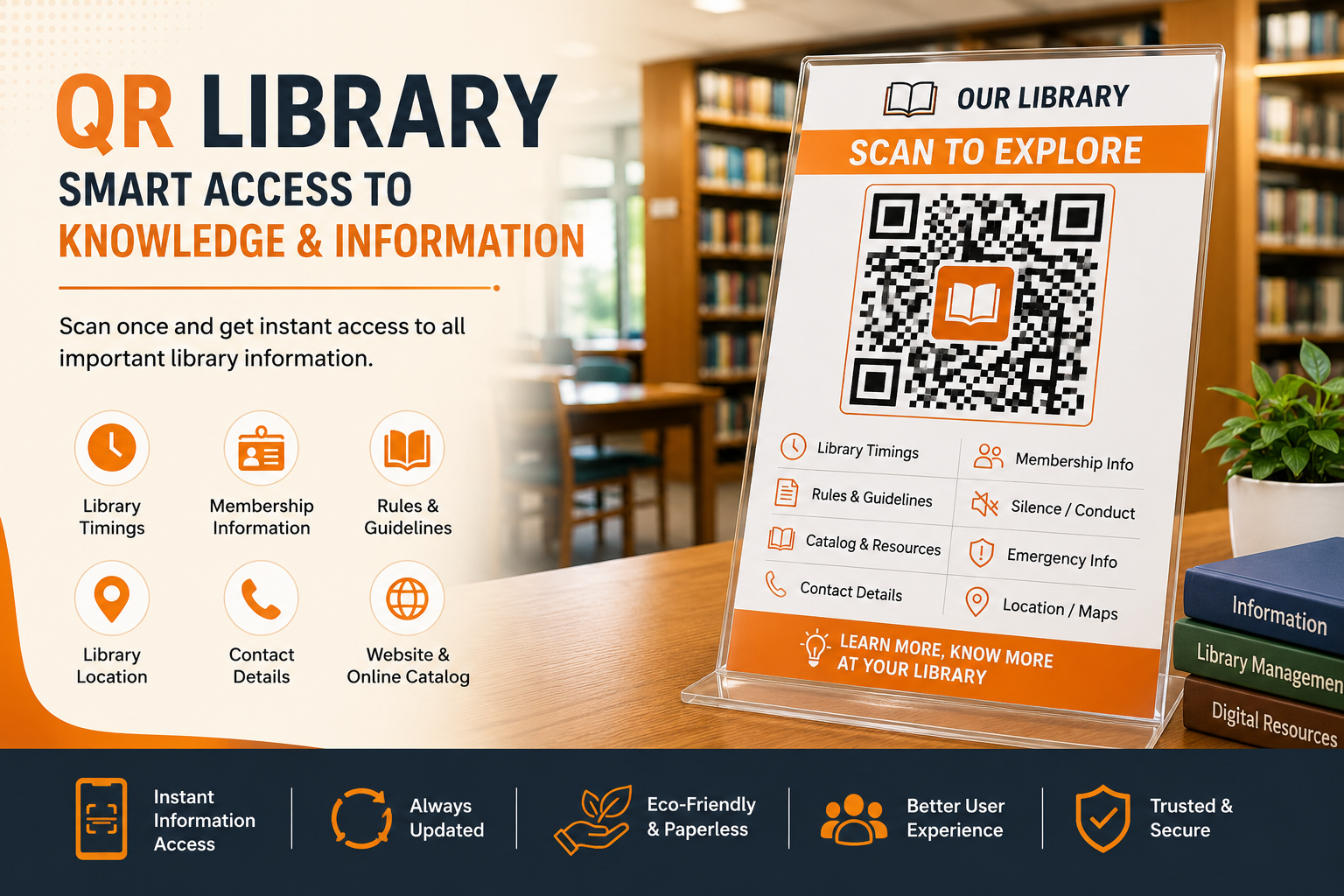
Instead of relying entirely on printed notices, manual processes, and physical information desks, libraries can now use QR codes to provide instant access to important information. With a simple scan, visitors can view library timings, membership details, catalog links, rules and regulations, emergency instructions, contact information, and much more. QR Library solutions help modernize library operations while making information more accessible for users.
Whether it's a school library, college library, university library, public library, research center, or corporate knowledge center, QR Library technology offers a smarter and more efficient way to connect users with information.
What Is a QR Library Code?
A QR Library Code is a digital QR code that provides visitors with instant access to library-related information through their smartphones. Instead of asking staff for details or searching through notice boards, users can simply scan a QR code and receive all the information they need.
A QR Library profile can include:
- Library name
- Operating hours
- Contact information
- Rules and guidelines
- Membership information
- Library services
- Online catalog access
- Website links
- Google Maps directions
- Emergency instructions
- Conduct policies
- Reading room details
Everything is available in one digital location, making it easier for visitors to access information whenever they need it.
Why Libraries Are Adopting QR Code Technology
The way people consume information has changed dramatically. Students and readers are increasingly using smartphones and digital platforms to access educational resources.
Traditional library communication often relies on:
- Printed notices
- Bulletin boards
- Physical directories
- Paper membership forms
- Manual information requests
While these methods still serve a purpose, they can be time-consuming and difficult to update.
QR Library Codes provide a more modern solution by delivering information instantly through a simple smartphone scan.
This improves convenience while reducing administrative work for library staff.
Making Library Information Easily Accessible
One of the biggest challenges libraries face is ensuring visitors can quickly find the information they need.
Common questions include:
- What are the library timings?
- How can I become a member?
- Where can I find the online catalog?
- What are the borrowing rules?
- How do I contact library staff?
Instead of waiting in line or searching through multiple sources, visitors can scan a QR Library Code and find answers immediately.
This improves user satisfaction and creates a more efficient experience.
Simplifying Library Membership Information
Many people are interested in joining libraries but may not fully understand the membership process.
A QR Library Code can provide instant access to:
- Membership requirements
- Registration forms
- Membership fees
- Borrowing privileges
- Membership benefits
Potential members can review information at their own convenience, making the registration process smoother and more transparent.
Providing Instant Access to Library Rules and Guidelines
Every library has rules designed to create a comfortable environment for all users.
These may include:
- Borrowing policies
- Return deadlines
- Reading room guidelines
- Computer usage policies
- Silence requirements
- Mobile phone policies
Instead of displaying lengthy printed notices throughout the facility, libraries can provide all guidelines through a QR code.
Visitors can review policies whenever needed.
Connecting Users to the Online Catalog
One of the most valuable uses of a QR Library Code is providing access to the library catalog.
Users can quickly search for:
- Books
- Journals
- Research papers
- Reference materials
- Digital resources
This allows visitors to explore available materials before searching physical shelves, saving time and improving efficiency.
For students and researchers, easy catalog access can significantly improve the research process.
Supporting Digital Libraries and E-Resources
Modern libraries increasingly provide digital content alongside traditional collections.
QR Library Codes can connect users directly to:
- E-books
- Digital journals
- Academic databases
- Research repositories
- Online learning resources
This creates a bridge between physical and digital library services.
Users can continue learning even when they are away from the library building.
Helping Students and Researchers Save Time
Students and researchers often work under tight deadlines.
Quick access to information can make a significant difference.
QR Library Codes help users:
- Locate resources faster
- Access library services instantly
- Find contact information
- View operating hours
- Navigate library facilities
By reducing unnecessary delays, libraries become more efficient and user-friendly.
Improving Communication Between Libraries and Visitors
Communication is essential for maintaining a positive library experience.
Libraries frequently need to share:
- Schedule changes
- Holiday closures
- New arrivals
- Upcoming events
- Workshops
- Research seminars
QR Library Codes provide a simple way to distribute this information digitally.
Visitors always have access to the latest updates.
Supporting Library Events and Programs
Libraries often organize educational programs that benefit the community.
Examples include:
- Reading sessions
- Book clubs
- Author talks
- Research workshops
- Educational seminars
- Children's programs
QR Library Codes can provide event schedules, registration forms, and event details through a single scan.
This encourages participation and improves event management.
Enhancing Navigation Inside Large Libraries
Large university and public libraries can sometimes be difficult to navigate.
Visitors may need assistance locating:
- Reading rooms
- Computer labs
- Archives
- Reference sections
- Study areas
QR Library Codes can provide interactive maps and navigation information that help users find their destination more easily.
This improves the overall visitor experience.
Supporting Contactless Information Access
Many people prefer self-service options that allow them to access information independently.
QR Library Codes support contactless access by allowing users to obtain information directly from their smartphones.
Benefits include:
- Faster service
- Reduced waiting times
- Better accessibility
- Improved convenience
This modern approach aligns with current user expectations.
Reducing Paper Usage and Printing Costs
Libraries often print large amounts of information including:
- Membership forms
- Policy documents
- Event announcements
- Guides and directories
QR Library Codes reduce the need for printed materials by providing digital alternatives.
This helps libraries:
- Save money
- Reduce waste
- Support sustainability initiatives
Environmentally conscious institutions can benefit significantly from this digital approach.
Why Dynamic QR Codes Are Better for Libraries
Information changes frequently.
Library managers may need to update:
- Operating hours
- Contact information
- Membership policies
- Event schedules
- Catalog links
Dynamic QR Codes allow these updates without changing the QR code itself.
Users continue scanning the same QR code while always receiving the latest information.
This flexibility makes dynamic QR codes an ideal solution for libraries.
Benefits of QR Library Codes
Libraries implementing QR Codes often experience several advantages:
- Faster access to information
- Improved visitor satisfaction
- Better communication
- Easier information management
- Reduced printing costs
- Greater digital engagement
- Enhanced user experience
- Increased operational efficiency
These benefits help libraries modernize their services while maintaining their educational mission.
Who Can Use QR Library Codes?
QR Library Codes are suitable for:
- School libraries
- College libraries
- University libraries
- Public libraries
- Research institutions
- Corporate libraries
- Community learning centers
Any organization that provides information and educational resources can benefit from QR Library technology.
The Future of Libraries and QR Technology
Libraries continue to evolve as digital technology becomes increasingly important.
Future applications may include:
- Smart library navigation
- AI-powered catalog assistance
- Personalized reading recommendations
- Digital borrowing systems
- Interactive educational experiences
QR Library Codes provide a strong foundation for these innovations by connecting users directly to digital resources and services.
Libraries that embrace technology today will be better positioned to meet the needs of future generations.
Why QR Orange QR Library Is a Smart Choice
QR Orange QR Library helps libraries create professional digital information pages that improve accessibility and communication.
With QR Orange, libraries can easily share:
- Timings
- Membership information
- Rules and guidelines
- Contact details
- Online catalog links
- Maps and directions
- Emergency instructions
This creates a more organized and user-friendly experience for visitors while reducing administrative effort.
Frequently Asked Questions
What is a QR Library Code?
A QR Library Code provides instant access to library information through a smartphone scan.
Can QR Library Codes provide catalog access?
Yes. Libraries can link QR codes directly to their online catalog systems.
Are QR Library Codes useful for students?
Absolutely. Students can quickly access library information, resources, and services.
Can libraries update information later?
Yes. Dynamic QR Codes allow content updates without changing the QR code.
Do users need a special app?
No. Most smartphones can scan QR codes directly using the built-in camera.
Are QR Library Codes suitable for public libraries?
Yes. Public libraries, schools, universities, and research institutions can all benefit from QR Library technology.
Conclusion
Libraries remain one of the most important centers for learning and knowledge sharing. As user expectations evolve, libraries must adopt modern solutions that improve accessibility and convenience.
QR Library Codes provide a simple yet powerful way to connect visitors with important information, digital resources, catalogs, membership details, and library services. By making information available instantly through a smartphone scan, libraries can improve user experiences while reducing administrative challenges.
Whether used in schools, universities, research centers, or public libraries, QR Library technology helps create smarter, more accessible, and future-ready learning environments.